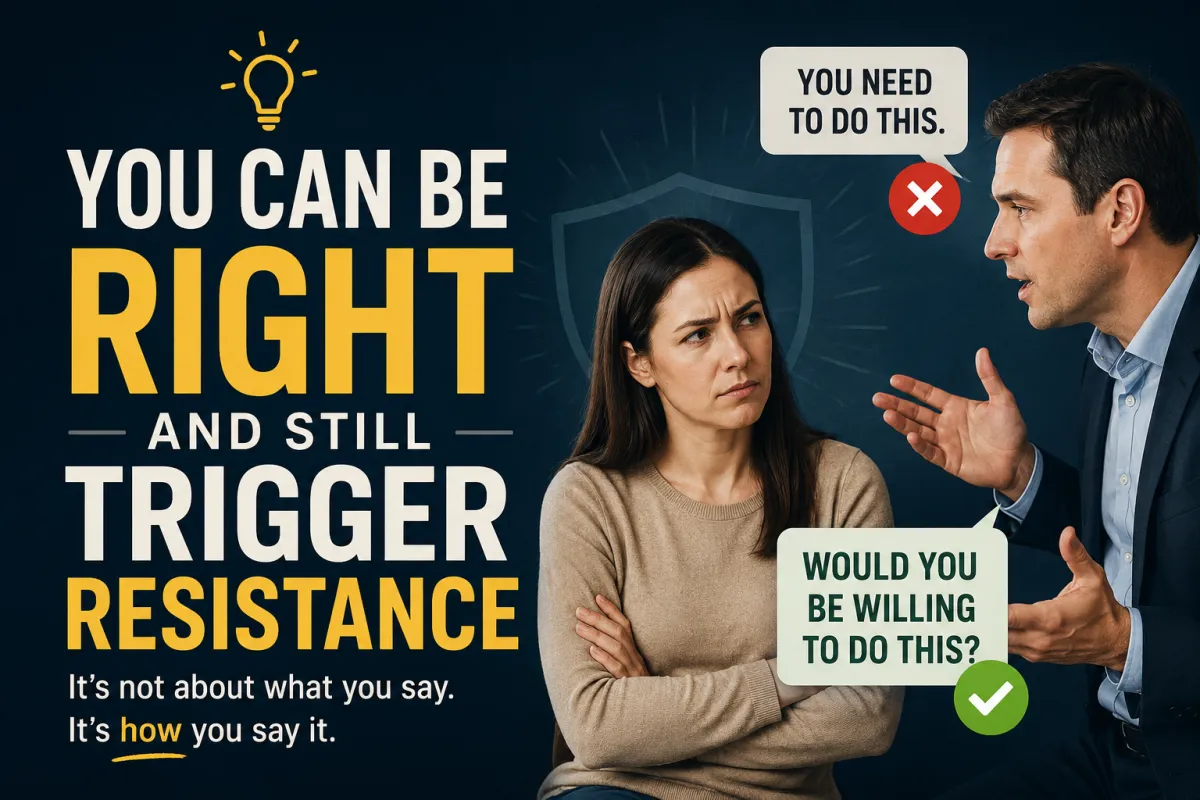
You Can Be Right and Still Trigger Resistance
How to Say Things So People Actually Listen: Why Tone Matters More Than You Think
Have you ever said something that was technically right, only to watch the other person push back anyway? That usually means the problem was not what you said - it was how you said it. In this post, you’ll learn a simple communication shift that can reduce resistance, improve leadership, and help people feel more valued when you ask them to do something. The idea is straightforward, but the impact can be huge: when people feel pushed, they resist; when they feel guided, they’re far more likely to cooperate. This matters whether you’re leading a team, parenting a child, managing a household, or just trying to have smoother conversations. If you’ve ever wished people would listen without feeling like you’re nagging, this is for you.
Why People Push Back When You’re Right
A lot of communication problems start with a simple assumption: if your message is correct, people should accept it. But real life doesn’t work that way. You can say, “You did that wrong,” and still be right - but the other person may hear criticism, not guidance. You can tell someone, “Go do the dishes,” and even if you have every reason to say it, they may still feel bossed around. That reaction is about human nature. Most people do not enjoy being told what to do. They want to feel autonomy, dignity, and a sense of control over what happens next. That’s why tone matters so much. The same instruction can feel completely different depending on the words you choose and the way you deliver them.
The Leadership Lesson: Force Creates Compliance, Not Commitment
If you’ve ever raised your voice to get a result, you already know this: force can work in the short term. Someone may comply while you’re watching. They may do exactly what you asked because the pressure is immediate. But that kind of obedience usually disappears when the pressure is gone. That’s the trap. Force may produce action, but it rarely produces ownership. The same goes for guilt. You can say things like, “I can’t believe you wouldn’t do that,” and sometimes people will move just to avoid the discomfort. But again, that response is temporary. It gets the job done once, not sustainably. The deeper problem is that force and guilt tend to create fear, anxiety, or resentment. And if you’re in a leadership role, that’s not the environment you want to build. A better goal is calm clarity. Good leaders don’t just get compliance - they help people understand expectations and feel capable of meeting them. That applies at work, at home, and in any relationship where you’re trying to help someone grow.
A Better Phrase: “Would You Be Willing?”
One of the simplest and most effective phrases in the transcript is this:
“Would you be willing?”
It works because it changes the emotional frame of the request. Instead of sounding like an order, it sounds like an invitation. It gives the other person a choice, which lowers resistance. It also preserves their autonomy, which makes them more open to saying yes. For example:
“Go do the dishes” can sound like command.
“Would you be willing to start on the dishes?” feels more respectful and collaborative.
That small shift matters more than people think. The speaker in the transcript points out that most people won’t immediately reject a request that feels like a choice. They may say, “Yeah, I guess I can do that,” and then follow through. That doesn’t mean you’re manipulating people in a negative way. The goal is not to trick them. The goal is to help them move toward the right action without creating unnecessary friction. There’s a difference between controlling someone and guiding someone. The best version of this approach is what the transcript calls “motipulation” - a blend of motivation and manipulation used to help someone reach a good outcome without making them feel cornered. Whether you love the term or not, the principle is useful: people are easier to lead when they feel respected.
“Can you help with this?”
“Would you be willing to start here?”
“Could you take a look at this with me?”
“Do you mind handling this next?”
These phrases don’t weaken your message. They make it easier to receive.
How to Audit Your Tone in Real Life
The most useful part of this message is the challenge: don’t just listen to what you say - listen to how you say it. That means becoming more aware of your own patterns. Do you get louder when you’re frustrated? Do you sound sharp when you’re rushed? Do you use sarcasm, guilt, or impatience when someone isn’t moving fast enough? If so, you may be creating resistance even when your intentions are good. A tone audit is simple, but it requires honesty. Ask yourself:
Did my words invite cooperation or demand compliance?
Did my tone make the other person feel valued or dismissed?
Was I trying to help, or was I trying to win?
Did I leave room for dignity and choice?
These questions can change the way you communicate almost immediately. They’re especially important in close relationships, where repeated tone patterns can shape how safe people feel around you. In parenting, for example, you may not always want a long negotiation with a three-year-old. That’s fair. But even when you need to be firm, you can still avoid unnecessary harshness. The same is true at work. You may need clarity, deadlines, and accountability. But firmness does not require demeaning language. The goal is not to become passive. It’s to become intentional.
When you start paying attention to tone, you may notice something powerful: the words are often less important than the feeling they create. And once you see that, you can start changing the outcome of conversations without changing your core message.
The Real Shift: From Pushing to Leading
At the heart of this idea is a simple leadership principle: people usually respond better to guidance than pressure. That does not mean you never set boundaries. It does not mean every request has to sound soft. Sometimes you do need to be direct and say, “This is what we’re doing.” But most of the time, you’ll get better results when people feel empowered instead of cornered. That’s why the transcript keeps returning to words like
valued, seen, and empowered
Those feelings matter because people rarely do their best work when they feel controlled. They do better when they feel trusted enough to participate. If you’re leading a team, this may mean rethinking how you delegate tasks. If you’re parenting, it may mean adjusting your tone before the argument escalates. If you’re in a marriage or partnership, it may mean noticing when your frustration is turning a request into a demand.
The practical lesson is not “say nicer things and everything will magically work.” The lesson is that tone is part of strategy. The way you say something can either open the door or slam it shut.
When you shift from pushing to leading, you do more than get better cooperation. You build trust. And trust makes future conversations easier, because people stop preparing for battle every time you speak.
Frequently Asked Questions
Why does tone matter more than the actual words? Because people react to how a message feels as much as what it says. Even a correct statement can trigger defensiveness if the tone sounds judgmental, rushed, or controlling.
What is the best way to ask for something without sounding demanding? Use language that gives the other person some autonomy, such as “Would you be willing to...” or “Could you help with...?” These phrases make the request feel more collaborative.
Is this the same as manipulation? Not necessarily. Negative manipulation tries to control people for selfish reasons. A respectful approach uses persuasion and clarity to reduce friction while still honoring the other person’s dignity.
Can tone really affect leadership? Yes. In leadership, tone shapes whether people feel safe, respected, and motivated. A calm, clear tone often creates better long-term results than fear or pressure.
What should I do if people still resist? If resistance continues, check both your tone and your expectations. Sometimes the issue is not just delivery - it may also be timing, clarity, or whether the other person feels heard.
